
The cost of living in Florida in 2026 sits about 0.7% to 3% above the national average, with housing, property insurance, and utilities driving most of the difference. Buyers can offset those costs through no state income tax, the homestead exemption, and choosing communities in more affordable regions of the state.
Florida attracts new residents every year with warm weather, coastal access, and tax advantages. Rapid growth has changed the picture over the past six years, though, and the Sunshine State that once ranked as an affordable Sun Belt destination now sits slightly above the national average. Homebuyers weighing a move should look past headline numbers and understand what the total cost picture looks like in 2026. Property taxes, insurance premiums, transportation costs, healthcare, and childcare costs all factor into the monthly budget, and each varies by county. Understanding the main cost categories helps homebuyers plan for closing and the years that follow.
What Determines the Cost of Living in Florida?
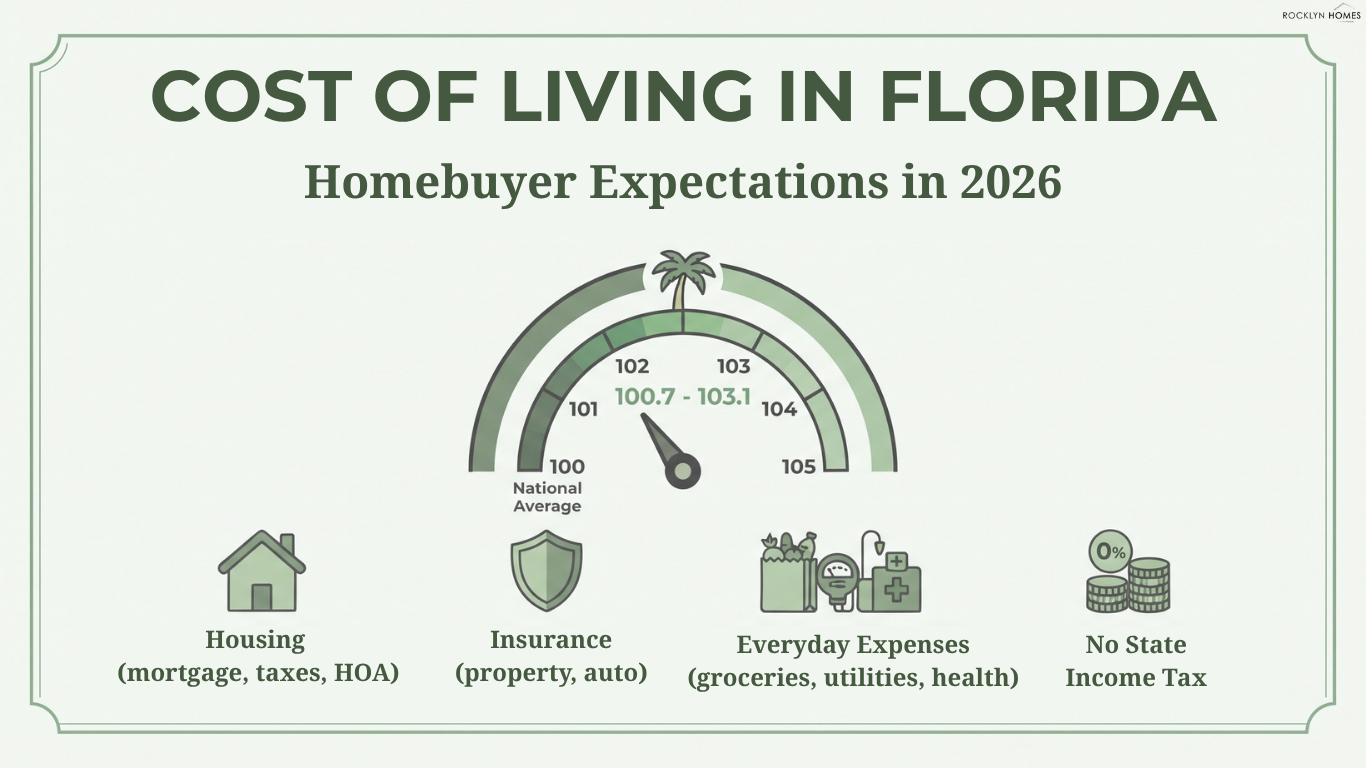
Florida’s cost of living reflects a mix of housing costs, taxes, insurance, and everyday expenses. The state’s overall cost of living index sits between 100.7 and 103.1 in 2026, depending on which index you consult, placing Florida slightly above the national baseline of 100.
Population growth is one reason costs have risen. Florida’s cost of living accelerated at 5.8% annually between 2020 and 2025, nearly five times the previous decade’s pace. Net migration into coastal metros tightened housing supply and pushed prices upward across most counties.
The main categories that shape a Florida homeowner’s monthly budget include:
- Housing: Mortgage payments, property taxes, and HOA fees make up the largest share of most household budgets.
- Insurance: Property insurance and auto insurance rates in Florida run above the national average, with hurricane exposure driving premiums higher.
- Everyday expenses: Groceries, utilities, healthcare costs, and transportation follow the national average closely in most metros.
Regional differences matter too. Fort Lauderdale runs about 25% above the national average, while Ocala sits 12% below. South Florida leads the state in housing costs, while parts of Central Florida and the northern counties remain more accessible for first-time homebuyers.
How Much Does Housing Cost in Florida in 2026?
Housing represents the largest line item for most Florida homebuyers, and prices vary sharply across the state. The statewide median home price is near $377,578 in mid-2026, running slightly above the national median. That statewide figure hides a wide split between markets. Rocklyn Homes offers single family homes and townhomes starting at the high $200s.
Regional Home Price Differences
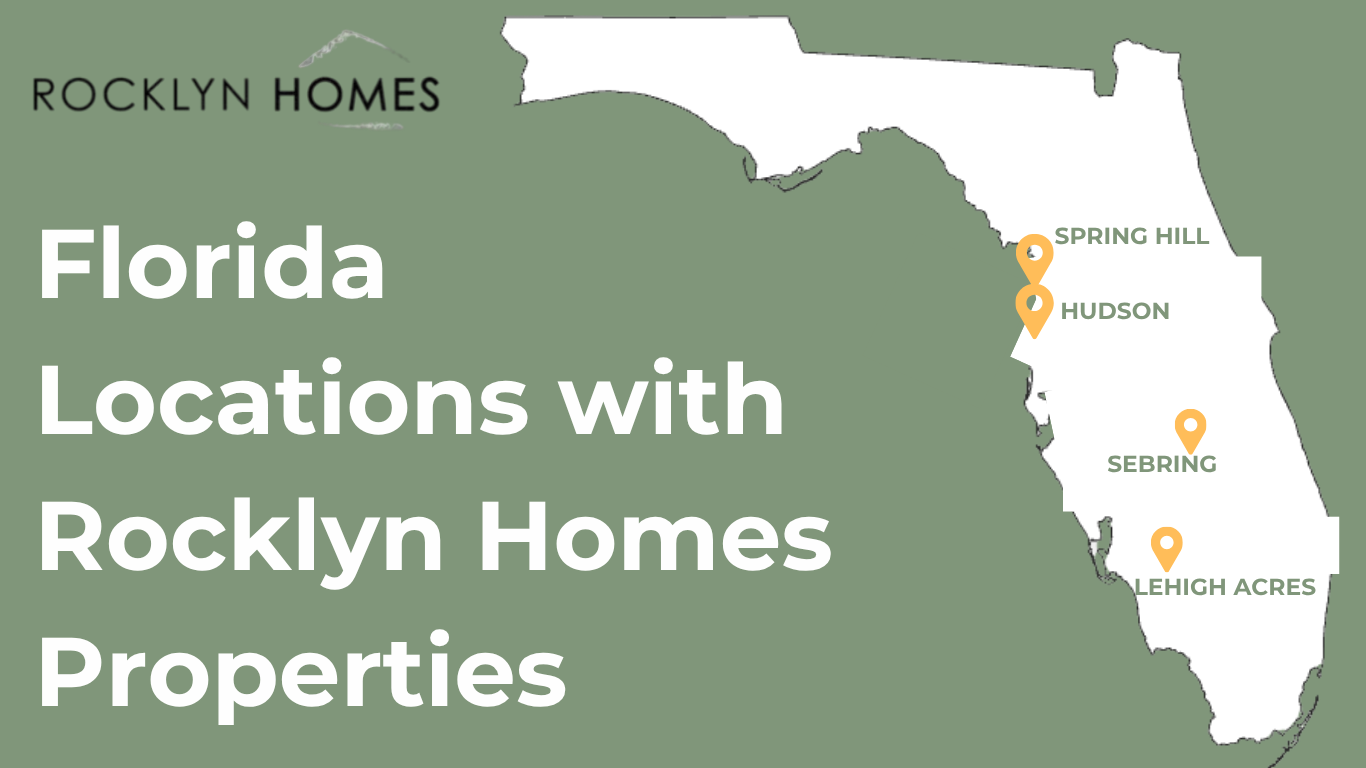
South Florida counties, including Miami-Dade County, Broward, and Palm Beach, carry median home prices above $500,000. Central Florida metros like Orlando and Tampa fall in the middle of the range, while North Florida and inland areas offer prices well below the state median. Growing suburbs like Spring Hill and Hudson on the Nature Coast, Lehigh Acres in Southwest Florida, and Sebring in Highlands County give homebuyers access to new construction homes at a lower price per square foot than dense urban markets.
Property Insurance and Utilities
Florida property insurance premiums climbed 40% to 50% between 2020 and 2025 as hurricane claims, litigation costs, and insurer exits reshaped the market. The statewide average annual premium now exceeds $4,000, and coastal counties can run well past $10,000. Newer construction generally qualifies for lower insurance costs thanks to updated building codes, wind mitigation features, and modern roofing systems. Utility costs, including electricity, water, and summer cooling, run close to the national average across most Florida metros.
Which Taxes and Everyday Expenses Should Florida Homebuyers Plan For?
Florida homeowners benefit from one of the most favorable tax structures in the country, though several categories still add up over the year. Planning for each helps buyers avoid surprises after closing.
Property Taxes and the Homestead Exemption
Florida’s effective property tax rate sits near 0.80%, below the national average. The homestead exemption removes up to $50,000 in assessed value from a primary residence, and the Save Our Homes cap limits annual assessment increases to 3% or the change in CPI, whichever is lower. Buyers who apply by March 1 of the year following their purchase lock in these protections.
Everyday Costs
Florida also charges no state income tax, which lets households keep more of their earnings compared to residents of New York, New Jersey, or California. Social Security benefits and retirement income are also untaxed at the state level. Everyday expenses in Florida run close to national averages, with a few local variations:
- Groceries: Food costs average around $395 per person each month, with higher totals in Miami and Fort Lauderdale.
- Transportation: Annual transportation costs run roughly $8,000 for a single adult and closer to $16,000 for a family with children.
- Health care: Individual healthcare costs average near $9,000 per year, with employer coverage and location influencing the total.
- Child care: Childcare costs vary widely by metropolitan area, with South Florida rates typically higher than Central and North Florida rates.
How Florida Compares to Other States
Florida stands out among high-migration states because of its tax structure and climate. New residents from higher-cost states often find their budgets stretch further, while those coming from lower-cost regions may need to plan for higher housing and insurance costs.
Compared with New York and New Jersey, Florida offers meaningful savings. The MIT Living Wage Calculator shows that a single adult in New York City needs to earn substantially more each year to cover basic needs than a single adult in Miami, and the gap widens against Central Florida metros like Orlando and Tampa. Florida also tends to run below California and Massachusetts on national cost-of-living indices, while sitting above lower-cost Southern states like Alabama and Tennessee.
Rocklyn Homes: Your Partner in Florida Homeownership

Florida offers a strong package for homebuyers in 2026, with no state income tax, valuable homestead protections, and a range of markets that fit different budgets. Rising costs in coastal metros mean buyers should plan carefully and pick the location and home type that fits their long-term goals.
Rocklyn Homes builds new construction homes and townhomes across Florida, with communities in Spring Hill, Hudson, Lehigh Acres, and Sebring designed for first-time buyers, growing families, and homeowners looking to right-size. Our design studio lets buyers personalize finishes, and our real estate team walks each buyer through incentives, financing options, and property tax planning. New construction also qualifies for lower insurance premiums in most Florida markets, adding another layer of long-term savings.
Ready to explore a Florida home that fits your budget and lifestyle? Visit Rocklyn Homes to browse our new home communities and schedule a tour today.
Frequently Asked Questions
Is Florida cheaper to live in than other states in 2026?
Florida sits about 0.7% to 3% above the national average in 2026, making it moderately priced. The Sunshine State costs less than New York, New Jersey, and California, but more than states like Alabama and Tennessee. No state income tax helps offset higher insurance premiums and housing costs.
What is the biggest expense for Florida homebuyers?
Housing is the largest expense, with the statewide median home price near $377,578 in mid-2026. Property insurance is the second-largest surprise cost, with the average annual premium topping $4,000 statewide and running higher along the coast.
Does Florida have a state income tax?
No, Florida has no state income tax. This benefits both wage earners and retirees, since Social Security benefits, pensions, and other retirement income are not taxed at the state level.
How does the homestead exemption save Florida homeowners money?
The Florida homestead exemption removes up to $50,000 in assessed value from a primary residence, reducing the annual property tax bill. The Save Our Homes cap also limits annual assessment increases to 3% or the CPI change, protecting long-term homeowners from rapid tax hikes.
Which parts of Florida have the lowest cost of living?
Ocala, Jacksonville, and inland North and Central Florida cities have the lowest cost of living in the state. Ocala runs about 12% below the national average. South Florida metros like Miami, Fort Lauderdale, and West Palm Beach carry the highest costs.