
A 55+ community is a neighborhood where at least 80 percent of homes have at least one resident age 55 or older. Federal housing law allows these communities to limit residency by age, which creates a quieter, low-maintenance lifestyle built around older adults.
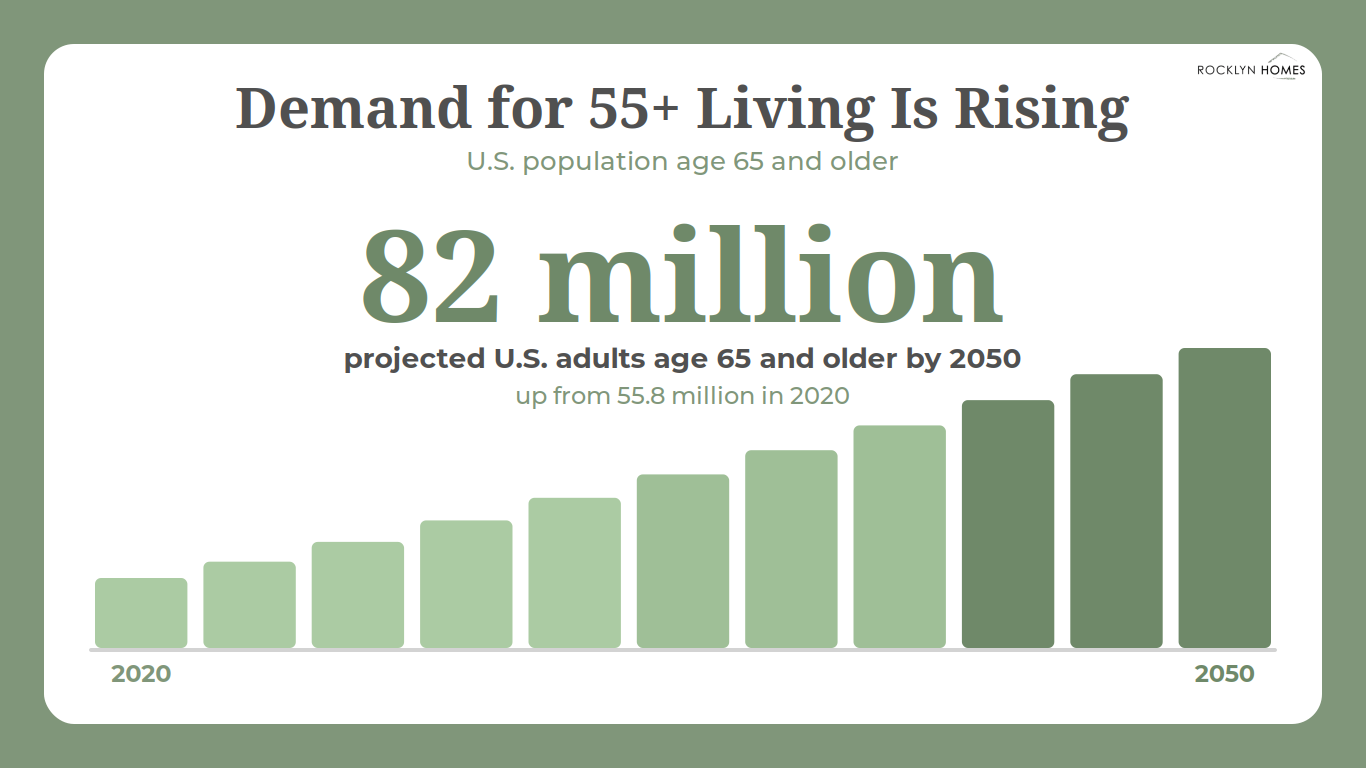
More Americans are reaching retirement age than at any point in the nation’s history. The population age 65 and older reached 55.8 million in 2020, a 38.6 percent jump in a single decade. That surge has driven strong demand for housing designed around active, low-upkeep living. Age-restricted neighborhoods answer that demand with single-family homes and townhomes, single-level floor plans, and neighbors at a similar stage of life. Understanding how these communities operate helps you decide if the lifestyle fits your next chapter.
What Is a 55+ Community, Exactly?
A 55+ community is a residential neighborhood designed and operated for older adults, often called an active adult community. It sets an age minimum for residents and builds daily life around low-maintenance living, shared amenities, and social connection. The 65-and-older population is projected to reach 82 million by 2050, and demand for this kind of housing keeps climbing.
How the 80/20 Rule Works
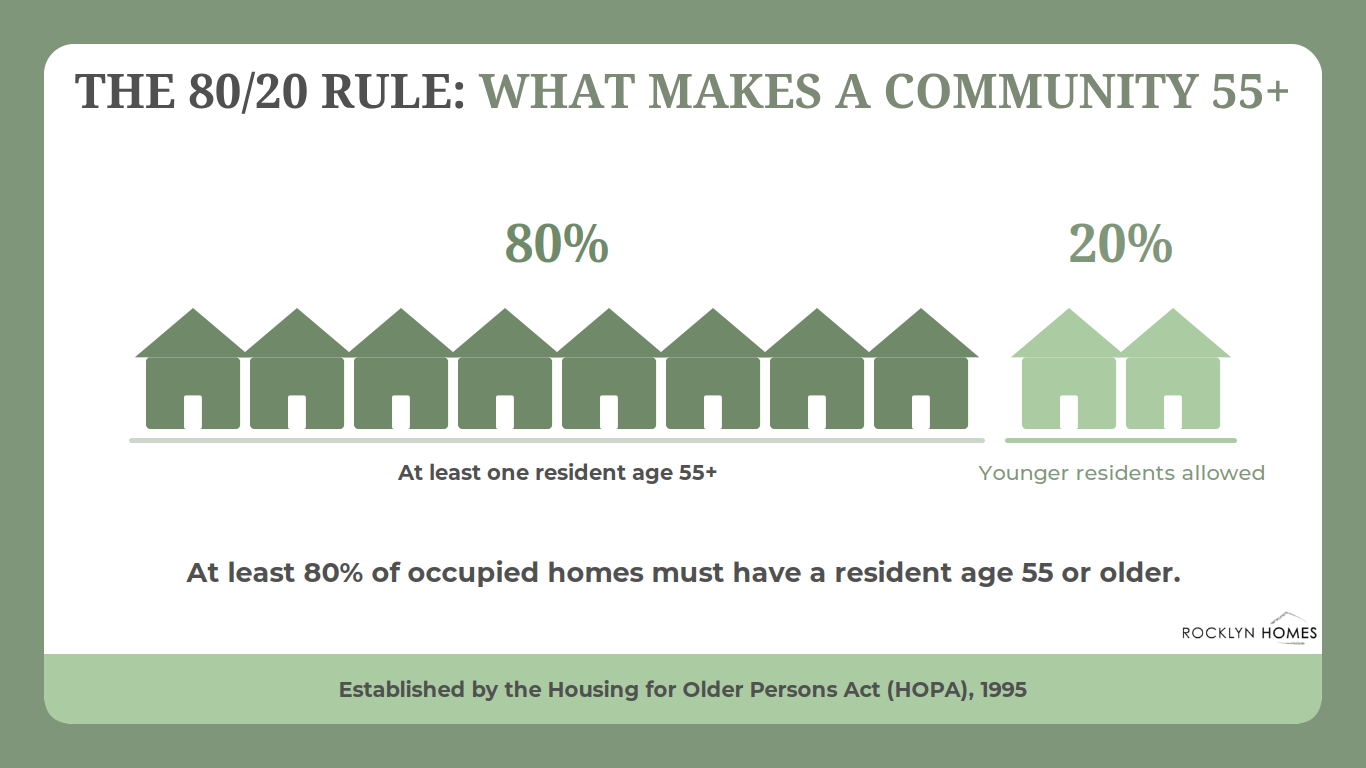
The age restriction comes from the Housing for Older Persons Act (HOPA), a 1995 amendment to the Fair Housing Act. It requires at least 80 percent of occupied homes to house one person age 55 or older. The remaining 20 percent gives communities flexibility for younger spouses, caregivers, or heirs. The rule applies to occupied units, which means vacant homes do not count against the total. A community that falls below 80 percent risks losing its age-restricted status.
55+ Versus 62+ Communities
Not every age-restricted neighborhood uses the same cutoff. Two main models exist under federal law.
| Community Type | Age Requirement | Who Can Live There |
| 55+ community | At least one resident per home is 55 or older | Up to 20 percent of homes may include younger residents |
| 62+ community | Every resident must be 62 or older | No younger-resident allowance |
Who Qualifies to Live in a 55+ Community?
Qualifying for a 55+ community is simpler than many buyers expect. The rules focus on one resident per home, not the entire household.
The Age Requirement
Most 55+ communities ask that at least one resident in each home be 55 or older. Every household member does not need to meet the age minimum. The qualifying resident must actually live in the home. You cannot buy a unit for a younger relative to occupy alone.
Can a Younger Spouse or Family Member Move In?
Yes, in many cases. A spouse or partner under 55 can usually live in a 55+ home as long as the older partner qualifies. The 20 percent allowance also covers live-in caregivers and adults who inherit a property. Rules vary by community. Some require the primary buyer to be 55 or older, while others set stricter terms. Confirm the specific policy before you commit.
What Rules Apply in a 55+ Community?
Age-restricted communities run on published policies that protect their legal status and keep the neighborhood consistent. Most rules fall into two areas.
Age Verification and HOA Policies
Communities have to prove they qualify for the age exemption. Federal guidance calls for age verification of the qualifying resident and reliable occupancy surveys at least every two years. A homeowners association usually manages these records along with community standards. HOA dues typically cover shared upkeep, which keeps common areas well-kept year-round.
Rules on Visitors and Children
Children can visit a 55+ community, and family stays are common. Grandchildren can spend a weekend or a holiday without issue. Age limits apply to permanent residency, not to visits. Extended or permanent stays by minors generally fall outside community rules. Each association sets its own guest policy. Review it during your home search.
What Are the Perks of 55+ Community Living?
The appeal of active adult living goes beyond the age restriction. These communities are built around convenience, recreation, and connection.
A Low-Maintenance Lifestyle
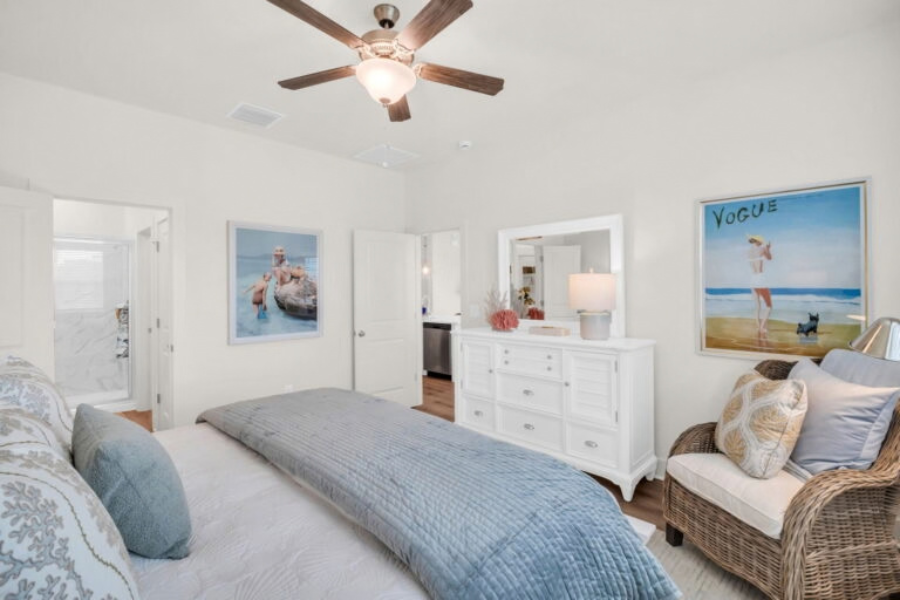
Exterior upkeep is one of the biggest draws. Many 55+ communities handle lawn care, landscaping, and common-area maintenance through the HOA. Single-level and owner’s-suite-on-main floor plans reduce stairs and daily effort. The result is more free time and less weekend yard work. This low-maintenance lifestyle appeals to buyers who want to travel, relax, or slow down. Medical facilities, shopping, and dining also sit within easy access of many communities.
Amenities and an Active Social Life
Shared amenities give residents convenient access to recreation and connection. Offerings vary by community, and common features include:
- Fitness centers and walking trails keep an active lifestyle within reach of home.
- Resort-style pools and outdoor pools offer a place to cool off and gather.
- Pickleball courts, tennis courts, and bocce ball courts support friendly competition.
- Golf courses, dog parks, and shuffleboard courts add variety to the daily routine.
- Clubhouses and recreation centers host social clubs, classes, and community events.
Social events and shared spaces help neighbors build friendships quickly. That sense of community is one reason active adult living stays in high demand.
Rocklyn Homes: 55+ Living in Central Florida
Rocklyn Homes builds new-construction homes and townhomes across Georgia, Florida and Alabama, including 55+ options for active adults in Central Florida’s Highlands region near Lake Jackson.
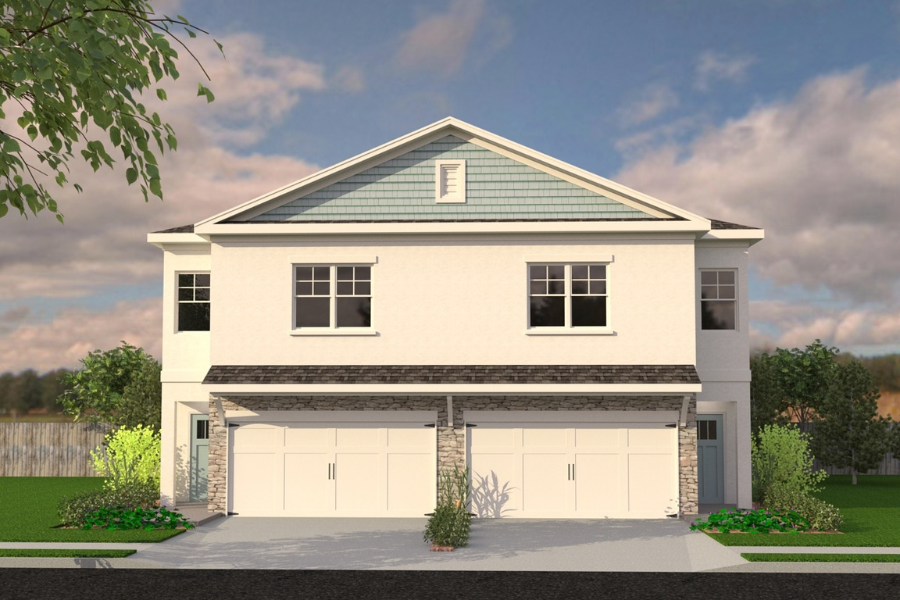
Townes of Sebring is a coming-soon 55+ townhome community of 251 homes on Scenic Highway. Each townhome offers roughly 1,700 to 1,800 square feet with a 3-bedroom, 2½-bath layout and an owner’s suite on the main floor. A nature trail runs through the HOA-backed community, ideal for morning walks.
For a community that is open now, Twin Lakes at Avon Park delivers resort-style amenities in nearby Avon Park. Residents enjoy a swimming pool, pickleball courts, a fitness center, shuffleboard and bocce ball, a clubhouse, and lake access with a public boat ramp.
Explore both communities to see which next chapter fits the life you want.
Frequently Asked Questions
What is a 55+ community?
A 55+ community is age-restricted housing where at least 80 percent of occupied homes have one resident age 55 or older. Federal law lets these neighborhoods limit residency by age. They are built for older adults who want low-maintenance living, shared amenities, and an active adult lifestyle.
Can someone under 55 live in a 55+ community?
Yes, in many cases. A younger spouse, partner, or live-in caregiver can live in a 55+ home as long as one resident meets the age minimum. The 20 percent allowance covers these households. Individual community rules can be stricter, so review the policy before buying.
What is the 80/20 rule in a 55+ community?
The 80/20 rule requires at least 80 percent of occupied homes in a 55+ community to include a resident age 55 or older. The remaining 20 percent allows for younger spouses, caregivers, or heirs. The rule comes from the Housing for Older Persons Act of 1995.
Do 55+ communities allow children to visit?
Yes. Children and grandchildren can visit a 55+ community, and short family stays are common. The age limits apply to permanent residency, not to visits. Each homeowners association sets its own guest policy for extended stays.
Where is Rocklyn Homes’ 55+ community located?
Rocklyn Homes offers 55+ living in Central Florida’s Highlands region near Lake Jackson. Townes of Sebring is a coming-soon 55+ townhome community in Sebring with owner’s-suite-on-main floor plans. Twin Lakes at Avon Park is open now in nearby Avon Park with resort-style amenities. Join the VIP list or waitlist for access.