


Atlanta’s cost of living in 2026 sits about 4% below the national average, with median home prices around $395,000 and one-bedroom apartments renting for roughly $1,498 per month. Housing remains the biggest factor in any Atlanta resident’s budget, though transportation costs and healthcare also influence what you spend each month.
For homebuyers considering metro Atlanta, the math looks favorable compared to cities like San Francisco or New York. The Atlanta area combines a strong job market with housing costs that stay below the U.S. average. New construction home options, growing suburbs, and a wide range of price points give first-time buyers more flexibility than they might find elsewhere.
How Much Does It Cost to Live in Atlanta in 2026?
Atlanta ranks as a moderately affordable major U.S. city in 2026. The overall cost of living comes in roughly 4% below the national average, while the state average for Georgia sits even lower. For comparison, a similar lifestyle in San Francisco would cost nearly twice as much in housing alone.
A typical single person in Atlanta spends between $2,500 and $3,200 per month, including rent. A family of four averages closer to $5,800 monthly. The biggest factor shaping these numbers is housing, followed by transportation, food, and healthcare.
At a Glance: Atlanta vs. National Average
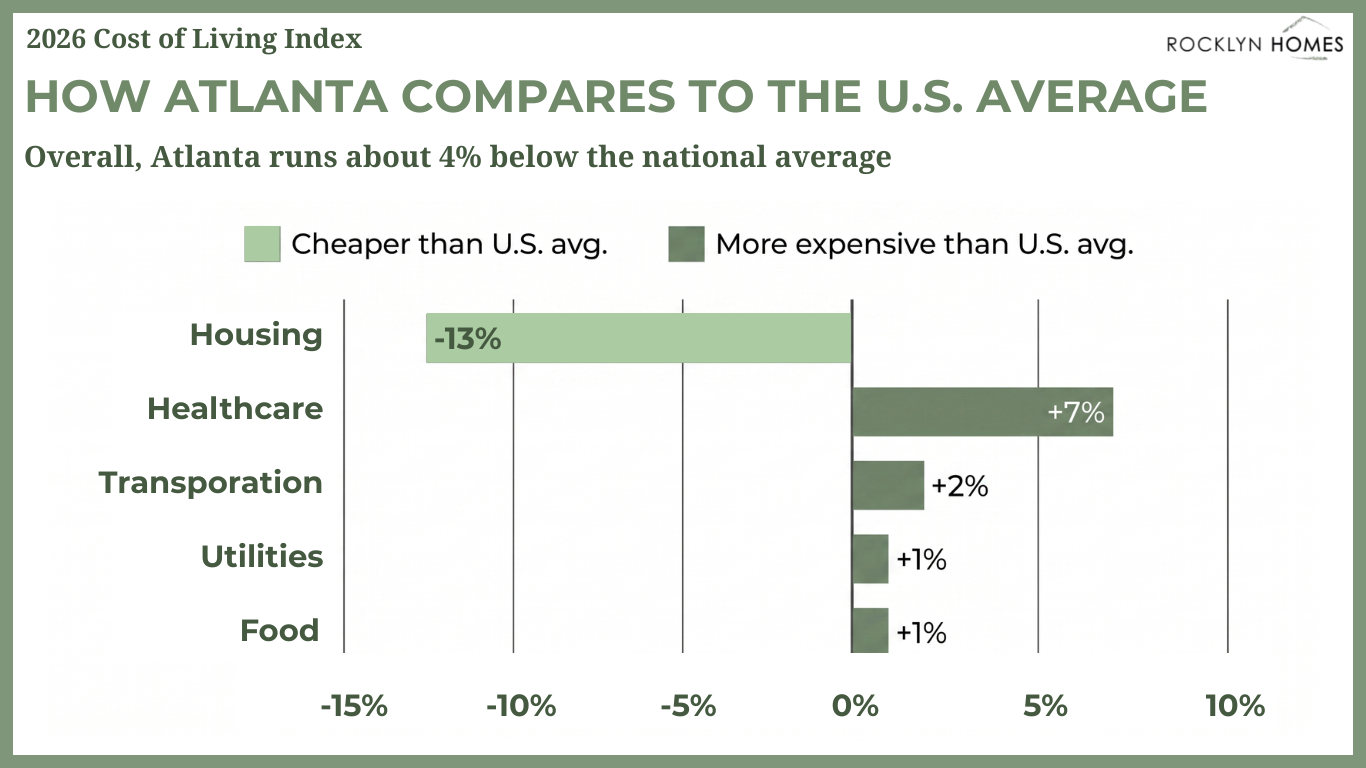
Here is how Atlanta living expenses compare to the U.S. average across the most common spending categories:
- Housing costs: About 13% lower than the U.S. average.
- Utilities: Roughly 1% above average, with energy bills near $220 per month.
- Healthcare: Approximately 5 to 7% higher than the national average.
- Transportation: Around 2% above average, depending on commute distance.
- Food and groceries: About 1% above the U.S. average.
These figures place Atlanta among the more affordable big-city options in the country.
What Are Housing Costs Like in the Atlanta Area?
Housing is by far the biggest factor in your Atlanta cost of living calculation. Whether you rent or buy, your housing decision drives most of your monthly budget.
Home Prices in Metro Atlanta
The median home price in metro Atlanta sits around $395,000 in early 2026. Single-family home prices have held steady, while townhome and condo prices have softened slightly. Inventory has climbed to a multi-year high, giving buyers more leverage than in past years.
New construction home options offer one of the most affordable paths into ownership. Some builders in the Atlanta area price townhomes from the $200s, which falls well below the metro median.
Rent Prices in Atlanta
The average rent for a one-bedroom apartment in Atlanta runs about $1,498 per month, while the citywide average rent across all unit sizes sits closer to $1,773. Rent prices vary widely by neighborhood. East Atlanta Village rents come in lower than Buckhead or Midtown, where prices push much higher.
Rent vs. Buy in 2026
A recent WABE analysis found that monthly costs for buying a home in metro Atlanta now slightly exceed average rent prices, mostly due to mortgage rates and property taxes. However, buyers build equity over time, while renters do not. For long-term residents, ownership still offers stronger financial returns.
How Do Transportation, Healthcare, and Daily Expenses Compare?
Beyond housing, three categories shape most of your monthly spending in Atlanta: transportation costs, healthcare, and food.
Transportation Expenses
Atlanta is a car-friendly city, but the Metropolitan Atlanta Rapid Transit Authority (MARTA) gives residents a public transportation option. A single MARTA ride costs $2.50, and a monthly pass runs about $95. Gas prices average $3.13 per gallon in 2026, slightly below the national figure.
Households that live near MARTA rail stations or work centers often save hundreds of dollars per month on fuel and vehicle wear. Commute distance has a bigger effect on transportation expenses than the hourly rate of gas itself.
Healthcare Costs
Health insurance and medical care cost roughly 5 to 7% more in Atlanta than the U.S. average. Employer-sponsored health insurance plans average around $400 per month for an individual, while a Silver marketplace plan averages closer to $600. A standard dentist visit costs about $144, and an optometry checkup runs about $131.
Food and Personal Expenses
Groceries cost about 1% more than the national average, with a gallon of milk priced at $4.64 and a dozen eggs at $4.30. Dining out remains affordable, with casual meals near $15 and mid-range dinners around $50. Food trucks and local markets offer budget-friendly options across the city.
Which Atlanta Areas Offer the Best Value for New Homebuyers?
The best Atlanta neighborhood depends on your priorities: commute, schools, lifestyle, and price point.
Suburbs Often Offer the Best Value
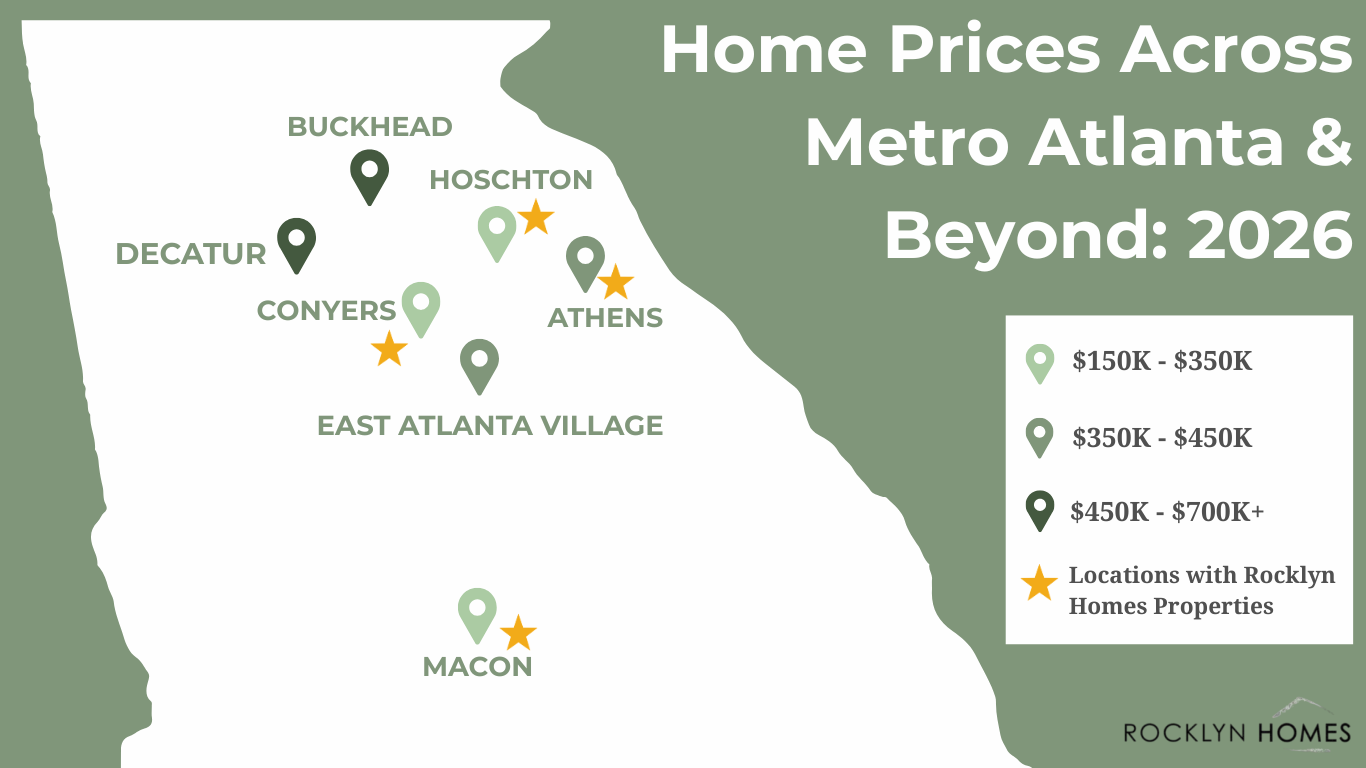
Suburbs like Conyers, Hoschton, Macon, and Athens offer new construction homes at prices well below the city center. These areas combine lower home prices with quick highway access to downtown Atlanta. First-time homebuyers often find that suburban metro Atlanta delivers the most square foot of home per dollar.
Job Market and Income
Atlanta supports one of the most diverse job markets in the southeast. Major employers in tech, film, finance, and logistics keep demand for housing steady. The state average for the living wage in Georgia falls below many coastal markets, which means your dollars stretch further here.
Universities such as Emory University, Georgia Tech, and Georgia State University also anchor the city’s employment base. A Georgia State campus job or a position at Emory University can support a comfortable lifestyle when paired with affordable housing in nearby suburbs.
Schools and Family Costs
Public schools across metro Atlanta vary in quality by county. Private school tuition can add a significant expense for families, often $15,000 or more per year per child. Suburbs with strong public schools, including parts of Forsyth, Cherokee, and Gwinnett counties, give families a way to manage education costs without paying private tuition.
Rocklyn Homes: Your Partner in Atlanta Homeownership

Rocklyn Homes builds quality townhomes and single-family homes across metro Atlanta, with prices starting from the high $200s in select communities. Founded in 2009, this family-owned builder has been recognized as one of Atlanta’s top homebuilders by the Atlanta Business Chronicle.
Each Rocklyn Homes townhome features award-winning floor plans, energy-efficient designs, smart home technology, and structural warranty coverage through 2-10 Home Buyers Warranty. For Atlanta homebuyers facing rising rents and stable home prices, owning a new Rocklyn Homes property can be a smart financial move.
Ready to find your new home in Atlanta? Visit Rocklyn Homes to explore our current communities, take virtual tours, or speak with one of our sales agents about move-in ready options.
Is Atlanta an affordable city to live in?
Yes. Atlanta is considered an affordable city compared to most major U.S. metros. The overall cost of living runs about 4% below the national average in 2026, with housing costs roughly 13% lower than the U.S. average. A single adult spends about $2,500 to $3,200 per month including rent.
How much does a home cost in Atlanta in 2026?
The median home price in metro Atlanta is around $395,000 in early 2026, according to recent MLS data. Prices vary by neighborhood, with the city center costing more than suburban areas. New construction townhomes from builders like Rocklyn Homes start in the $200s in select communities.
How much do you need to earn to live comfortably in Atlanta?
A single person needs to earn roughly $107,000 per year to live comfortably in Atlanta, while a family of four needs closer to $230,000 annually. These figures account for housing, healthcare costs, transportation, and personal expenses. The median household income in Atlanta is about $85,652.
Is it cheaper to rent or buy in Atlanta in 2026?
Renting is slightly cheaper than buying on a month-to-month basis in Atlanta as of early 2026, mostly due to higher mortgage rates. However, buying builds equity over time, while rent payments do not. For buyers planning to stay five years or more, ownership usually wins financially.
What are transportation costs like in Atlanta?
Transportation expenses in Atlanta run about 2% above the national average. A single MARTA fare costs $2.50, a monthly public transportation pass costs $95, and gas averages $3.13 per gallon. Households that live near a MARTA rail station can save hundreds of dollars monthly on vehicle costs.